

bayombong, NV
Oct. 26–28, 2026 (Mon–Wed)
Baguio City
Nov. 2–5, 2026 (Mon–Wed)
8am–4pm

Philosophy of Ministry
1 Credit Course
Christian Leadership
2 Credit Course

Please review specific enrollment & tuition details below.
Applicants will be screened.
Philosophy of Ministry
-
Some of the first questions one must ask to a ministry or to a local church are: “What are you doing?” and “Why are you doing what you are doing?” I am aware that all ministries are doing something. But I am not sure if ministries know why they are doing what they are doing! Now, if one does not know why they are doing what they are doing, it can easily give birth to a problem, that is, one may not be doing the right things.
In the field of Christian Education, ministry practitioners and professors are first asked to write a philosophy of ministry for Christian education. The reason is simple. They want to provide a framework within which theological, philosophical, and empirical convictions can be identified, integrated together, and then extrapolated as concrete practices.
In navigational terms, one may be going somewhere, but the issue is, do you know where you are going?
Initially, there was a problem with the name of this course. Why? Today, the purpose of philosophy for many ministers is no longer clear, especially with the negative connotations that developed through the years. This is especially true among Filipinos. The tag, “Pilosopo Tasio” is not really positive. Some view philosophy as irrelevant, and to a certain degree, even evil in the ministry. Others view philosophy as helpful and enriching in terms of education, preaching, counseling, and other ministry expressions, to churches and their ministers.
This course on the Philosophy of Ministry will address this issue on why we are doing what we are doing. It will question our priorities.
Christian Leadership
-
Leadership has often been envisioned as a solo act. Effective and Transformative Leadership is called for as the key to the future growth and fulfillment of the purpose of the church. Evaluations of leadership are often focused on a designated leader. Neither in secular organizations, nor (especially in ecclesiastical communities) is this either the most appropriate or even possible vision of leadership. Individuals may be catalysts, articulate shepherds, role models or skilled planners and strategists. However, the model of leadership that is evident at the very beginning of the ministry of Jesus is to call together a team, an intimate community of disciples, an assembly of gifted and limited folk to lead the emerging mission and ministry of the church. The focus of this course is to collect the biblical images and purposes of leadership, and appropriate their lessons to the ministry of the student in context.
Meaning: The student will focus on knowing the biblical and key contemporary thinking around the theme of leadership.
The student will focus on their current appropriation of being a leader and the place (or lack of place) of teams in their specific ecclesiastical organization and positing the future possibilities of establishing and/or enhancing the team approach to ministry in context. And, envisioning contemplating steps that would engage in doing the transformative work of leadership in a team context.
-
By the completion of this course, students will:
Focus on the importance and appropriate place of teams in the work of leadership in a church or ecclesiastical organization.
Describe the student’s own use of the teams or possible enhancement of teams in their leadership work. This will include a reflection on the student’s own place within the ecology of teams and the relationship of leading and following within the teams they have experienced.
Chart a plan for their current context within which the student exercises ministry through teams to live into the mission and make the vision of the organization more dynamic. The student will describe how this approach to ministry might enhance the practice of the core values of the organization and enhance the participant’s life of Christian discipleship in terms of spiritual description and actual team practices.
Bayombong, NV
Date: October 26–28 (Mon–Wed)
Tuition:
300 PHP meal fee
Location:
The King’s Church
Quezon St., San Nicolas, Bayombong, NV
For more information, please contact:
Pastor Joshua at 0917-516-9964
Baguio City
Date: November 2–5 (Mon–Thurs)
Tuition:
750ph (250php per credit)
meal included
Location:
#4 Bado Dangwa Street
Guisad, Baguio City
For more information, please contact:
Sis. Gina at 0905-581-9527
Bro. Gerald at batanes@gmail.com
November 7, 2026
8am–4pm
Al Metal Master Inc.
504 JP Rizal St. Lamuan
Malanday, Marikina City
For questions, please contact Sis. Yolly at 0917 806 0349
1 Credit Course
Credits and certification will be issued.
TUITION: 250 PHP
Applicants will be screened.
-
This is a course on the study of Parables as one of liveliest forms of communication in the Hebrew culture. This course will focus on how it is to be interpreted and applied with serious consideration on its Hebrew and rabbinic roots. In Christianity, parables have been relegated mostly to the teaching of children in the Sunday school. That is not how it was first intended to be. Jesus taught in parables to His audience, which was composed of educated and unschooled people, religious and non-religious people, slaves and masters, young and old. This means that parables can be used to teach all kinds of people in all levels. This explains why the settings where Jesus used parables are outside of the synagogues. The setting has always been in the context of “with” the people while walking, eating, etc., in response to a question.
Meet Your Instructor
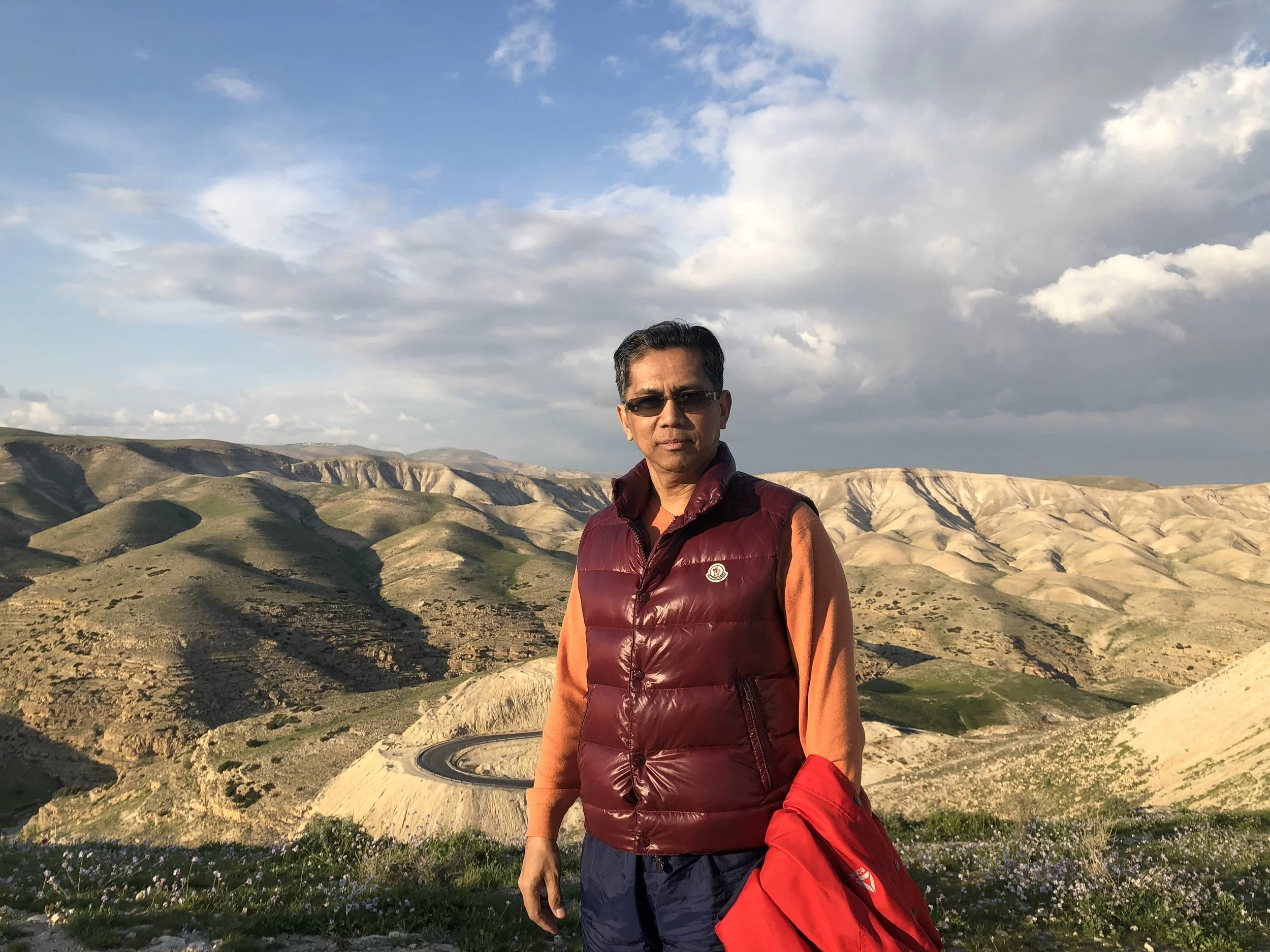
Rev. Jose P. Nacionales, D.Min
Dr. Jose Nacionales is the Director of Shema Bible Institute. He specializes in biblical studies and congregational leadership. In 1996, he pioneered Lion’s Heart Christian Ministries, Inc. in Chicago, Illinois. He did his graduate studies at Regent University in Virginia Beach, Virginia and Garrett Evangelical Theological Seminary in Evanston, Illinois. He is also heavily involved in missions and in the training and teaching of ministers and Christian leaders. Furthermore, he conducts study tours in Israel.